RFID Wristbands & Chip Bands
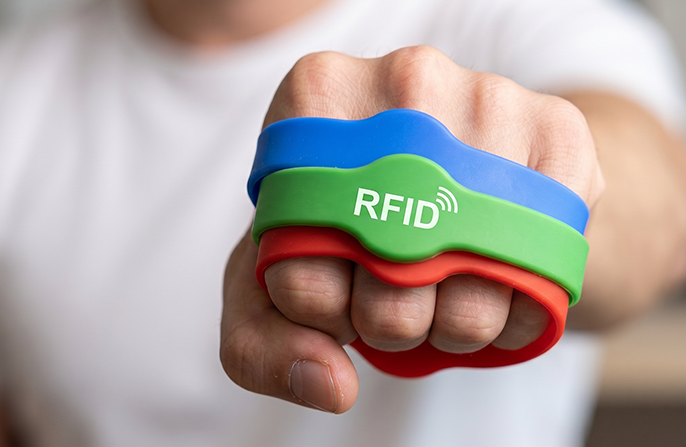
RFID wristbands (also known as chip bands or RFID silicone wristbands) combine wearing comfort with contactless identification. As robust admission bands, they are ideally suited for access control at events, in fitness studios, swimming pools and locking systems, as well as for time recording and visitor management. Whether MIFARE, LEGIC or NFC technology – we will recommend the right RFID wristband for your application. RFID wristbands can be personalised with your logo, are available in almost any colour, and in various materials such as silicone, ABS or fabric. Request a non-binding quote now.
FAQ on RFID Wristbands and Chip Bands
What is an RFID wristband (chip band) and how does it work?
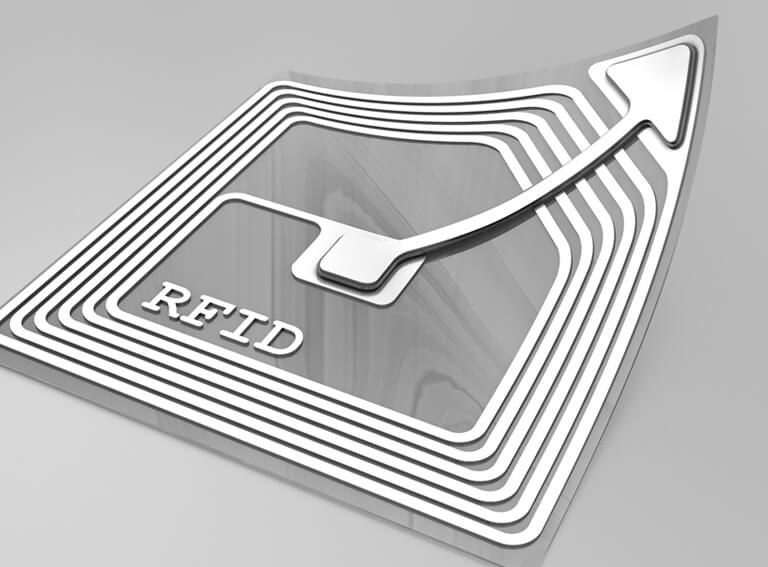
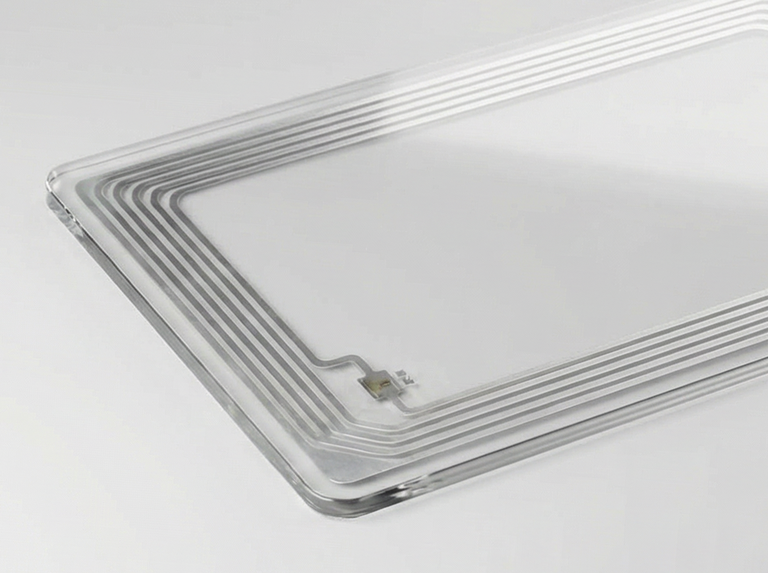
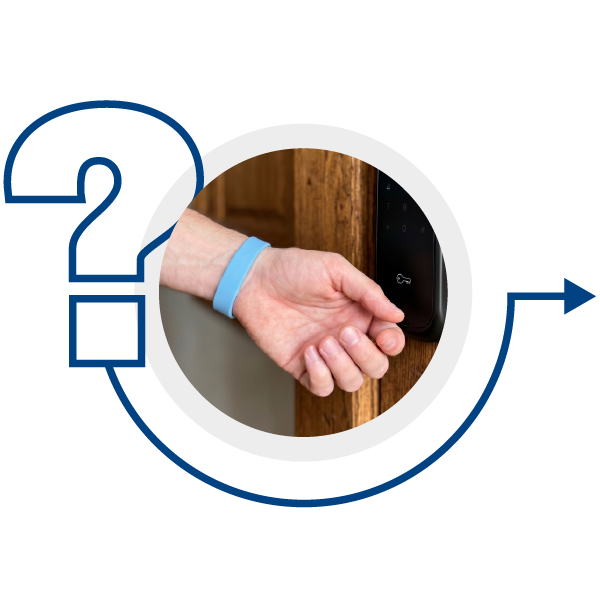
An RFID wristband consists of a passive RFID transponder – a microchip and an antenna – embedded in a robust casing made of silicone, ABS plastic, fabric or leather. The chip stores a unique identification number (UID), which is read contactlessly by radio from the RFID reader. As passive transponders do not require their own battery, RFID wristbands are maintenance-free and durable. Depending on the frequency (125 kHz / 13.56 MHz), the reading range is anywhere from a few centimetres up to half a metre. As soon as the RFID wristband enters the reading range, the chip transmits its data within milliseconds – ideal for quick access control at events, in fitness studios or swimming pools.
Which chip technologies are available for RFID wristbands – MIFARE, LEGIC or NFC?
The choice of chip standard determines the compatibility, security level and area of application of your RFID wristband. MIFARE Classic (1K/4K) is the most widely used standard and is compatible with most access control systems and locking systems. MIFARE DESFire offers AES-128 encryption and is the most secure choice for payment systems and high-security areas. LEGIC chips are particularly widespread in industrial and corporate environments. NFC-enabled RFID wristbands (e.g. NTAG213/215) can additionally be read via smartphone, making them ideal for events and smart marketing. EM chips (125 kHz) are suitable for straightforward time recording and access control.
What materials and designs are available for RFID wristbands and chip bands?
RFID wristbands are available in various materials, each covering different areas of application. The RFID silicone wristband is particularly popular: it is water-resistant, skin-friendly, durable and ideal for fitness studios, swimming pools, festivals and triathlon events. Wristbands made of ABS plastic offer a robust casing and are suitable for long-term use in access control and time recording. Fabric chip bands are well suited to events and festivals, as they are comfortable and intended for single use. Leather wristbands are preferred for upmarket club areas, spas and wellness facilities. When choosing the material, factors such as wearing comfort, water resistance, resistance to disinfectants and the planned duration of use should be taken into account.
Where are RFID wristbands used for access control and time recording?
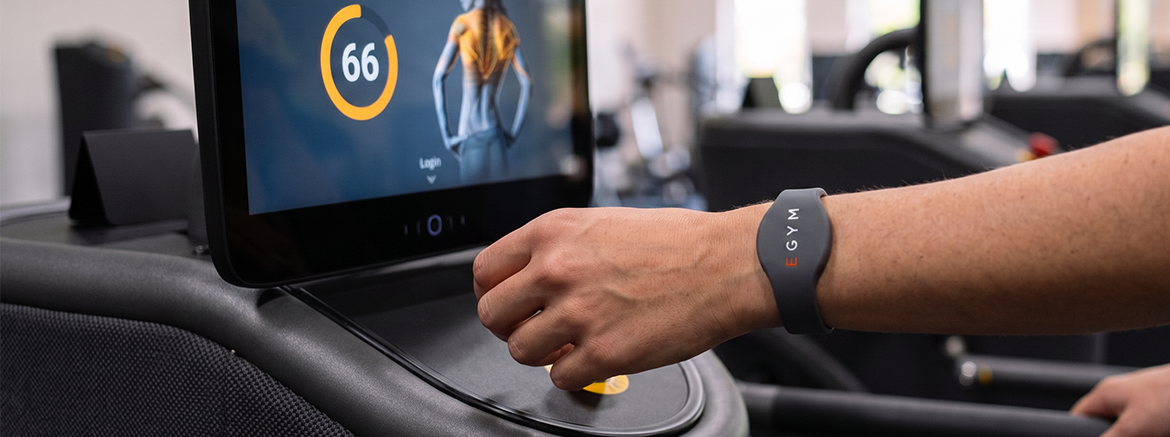
RFID wristbands are suitable for almost any area where contactless identification, access control or time recording is required. Typical areas of application include: fitness studios and wellness areas (locker management, access control), festivals and concerts (admission control, cashless payment), swimming pools and leisure baths (lockers, till integration), hospitals and care facilities (patient identification), triathlons and sporting events (chip timing), corporate locking systems (employee identification), production data capture (PDC) systems, and trade fairs and events (visitor management). Thanks to their robust construction and water resistance, RFID wristbands are particularly well suited to sport and outdoor applications.
Are RFID wristbands secure? Data protection and encryption
The security of RFID wristbands depends on the chip standard used. MIFARE Classic offers basic encryption, which is sufficient for most access control applications. For security-critical applications such as payment systems or high-security areas, we recommend MIFARE DESFire with AES-128 encryption, which reliably prevents unauthorised reading. Important: passive RFID wristbands can only be read at short range (a few centimetres to a few metres) and require an active reader. For GDPR-compliant use, the data stored should be kept to a minimum and the purpose of use clearly defined. Special RFID protective sleeves guard against unauthorised reading (skimming); however, this is generally not a relevant risk in the events and fitness sector, as no payment data is stored.
Can an RFID chip in a wristband be tracked?
No – passive RFID wristbands do not allow real-time GPS-based tracking. A passive RFID chip only sends signals when it is in the immediate vicinity of a reader (a few centimetres up to a maximum of 1–2 metres) and is supplied with energy by the reader's electromagnetic field. It is not an active transmitter and cannot be tracked remotely. Active RFID systems or GPS/GSM trackers – a completely different technology – are used for continuous tracking of people or objects. RFID wristbands merely log when and at which reading point a chip was registered, for example when entering a fitness studio or passing a timing point.
What are the disadvantages of RFID wristbands?
Like any technology, RFID wristbands have potential limitations that should be considered when making a purchasing decision. The reading range of passive wristbands is limited to a few centimetres up to a maximum of one metre, which makes them unsuitable for long-range tracking applications. Metallic surfaces and strong magnetic fields can interfere with signal transmission. In addition, an infrastructure of compatible readers and software is required, which involves investment. Low-cost chips (e.g. MIFARE Classic) offer limited encryption and can be read if known security vulnerabilities exist. For critical applications, we therefore recommend more modern chip standards such as MIFARE DESFire. Furthermore, once programmed, chips cannot be rewritten without the appropriate equipment, which must be taken into account when planning a system.
How do I choose the right RFID wristband for my application?
Choosing the right RFID wristband depends on several criteria. First, you should define the area of application: a waterproof RFID silicone wristband is suitable for fitness studios and swimming pools, an affordable fabric band for festivals, and a robust ABS casing for long-term employee identification. The chip standard depends on your existing reader system: MIFARE, LEGIC or EM are the most common options – please check compatibility with your locking system or access system. The frequency (125 kHz or 13.56 MHz) must match the readers. For personalised RFID wristbands with a logo and individual printing – including laser engraving, numbering or photo personalisation – please get in touch with us. We offer attractive volume pricing for large quantities; small quantities are also possible. Our team will be happy to advise you free of charge on your choice.
How do RFID wristbands differ from key fobs and RFID cards?
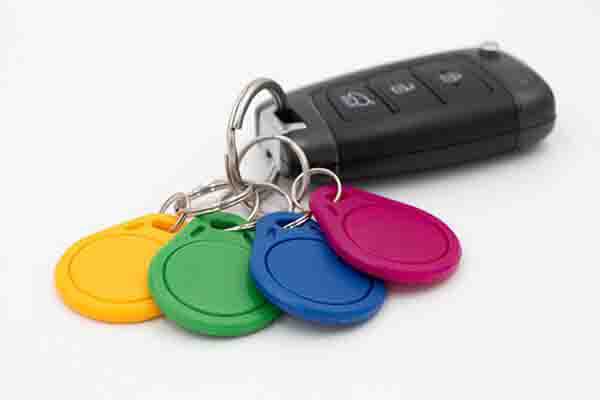
RFID wristbands, key fobs and RFID cards all use the same transponder technology – the difference lies in the form factor and therefore in wearing comfort and the risk of loss. The RFID wristband offers the greatest advantage of being virtually impossible to lose: it sits on the wrist and is worn unconsciously during sport, events and leisure activities, without needing to be packed or searched for in a bag – ideal for fitness studios, triathlons or festivals. RFID key fobs are attached to a keyring and are therefore practical for employees within companies and locking systems. Credit-card-sized RFID cards fit into a wallet and are standard for staff ID cards and customer cards. All form factors can be fitted with the same chip technologies (MIFARE, LEGIC, EM, NFC) and can be personalised.
What are NFC wristbands and what are they used for?
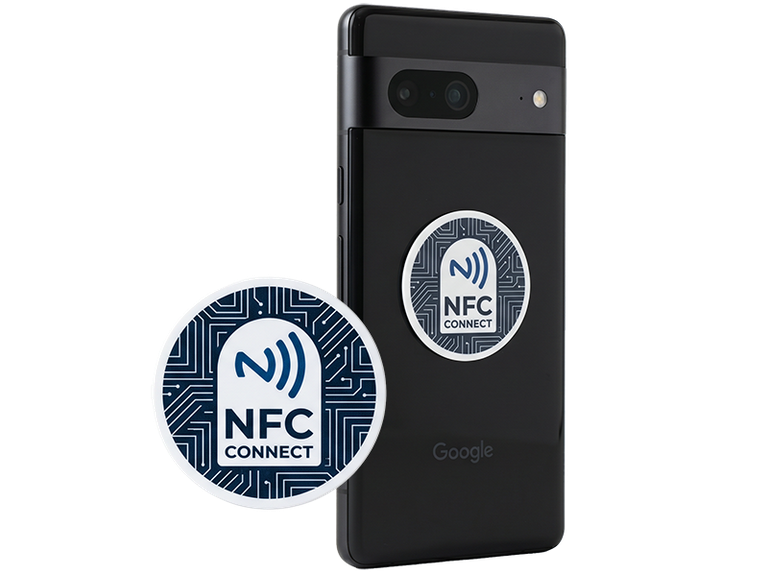
NFC (Near Field Communication) is a subset of RFID technology that operates at 13.56 MHz with a range of a few centimetres. The key advantage of NFC wristbands is that they can be read not only with stationary readers but also directly with standard smartphones. This opens up a wide range of applications: cashless payment systems at festivals and events, smart marketing (redirecting to product pages or landing pages via a smartphone tap), digital business cards and contact exchange, interactive experiences in museums or showrooms, and product authentication. NFC RFID wristbands are particularly suitable for applications where visitors are meant to actively interact with the wristband themselves. Common NFC chips include NTAG213, NTAG215 and NTAG216.
Can RFID wristbands be personalised with a logo and individual designs?
Yes – RFID wristbands can be personalised in many ways. Possible customisations include: printing with a logo, text and graphics (single or multi-colour), laser engraving of the surface for permanent labelling, numbering (sequential or individual), UID printing or a combination of barcode/QR code, as well as photo personalisation using special production methods. Almost all RAL and special colours can be produced. RFID wristbands with a logo are excellent as a promotional medium at events, in the premium areas of fitness or wellness studios, and for corporate branding. We offer fast sample delivery for initial samples and prototypes. We would be happy to prepare an individual quote for you, including a layout proposal.
From what quantity are RFID wristbands available, and how much do they cost?
RFID wristbands are available both in very small quantities and in large production runs. Pricing depends on the chip type, material, level of personalisation and order quantity. Simple silicone RFID wristbands start in the single-digit euro range for small quantities; for large volumes (1,000 pieces upwards), the unit price is reduced considerably. For an individual price quote – including encoding, personalisation and logistics – please request our quote. We will advise you on the optimum balance between cost and functionality for your specific application, whether for a one-off event or ongoing operation.