What is an NFC tag?
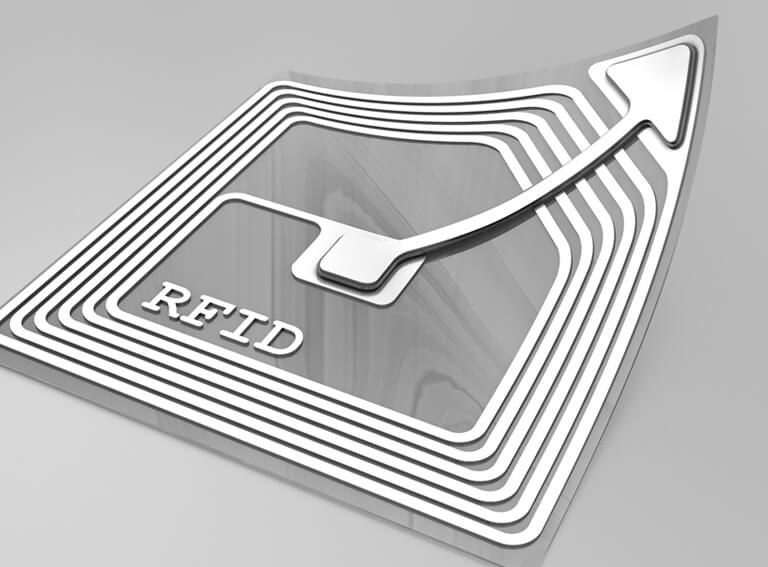
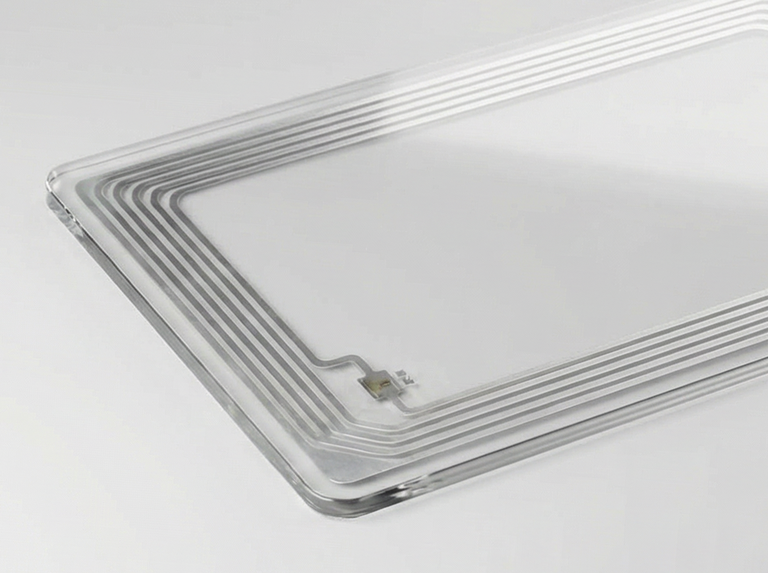
RFID stands for "Radio-Frequency Identification" and refers to identification using electromagnetic waves. An RFID tag consists of two core components: a microchip (memory) and an antenna, which together form what is known as an RFID transponder. This transponder is passive – it does not require its own battery, but draws its energy wirelessly from the electromagnetic field of the RFID reader.
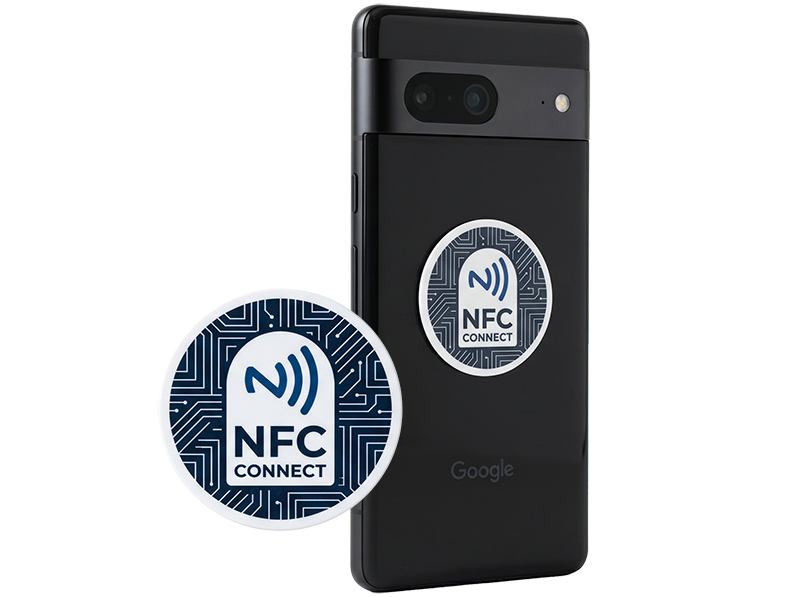
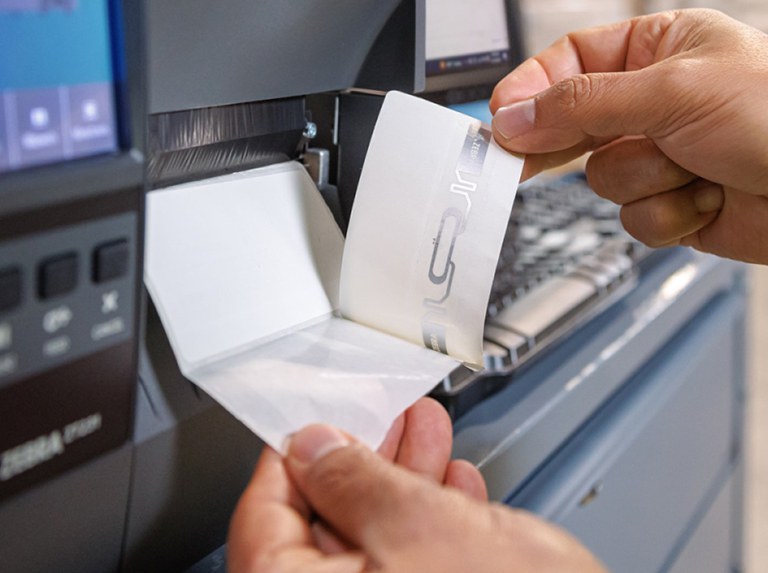
An NFC tag (also known as an NFC sticker or NFC label) is a passive data carrier consisting of a microchip and an antenna. These are embedded in a thin, self-adhesive film. NFC stands for Near Field Communication – a short-range communication technology that enables contactless data exchange at 13.56 MHz. As the NFC chip does not require its own battery, it draws its power inductively from the electromagnetic field of the reader or smartphone. Communication is limited to a range of a few centimetres (1–10 cm), which is referred to as the ‘near field’. NFC tags can store information such as URLs, contact details, Wi-Fi access details or automation instructions, and transmit this information when an NFC-enabled device comes into proximity.
What types of NFC tags are there? An overview of chip types and variants
All About Cards offers NFC tags with various chip types. The main variants in the NTAG series are the NTAG213 with 144 bytes of user memory (ideal for URLs and simple text), the NTAG215 with 504 bytes (often used for smart home automation) and the NTAG216 with 888 bytes for more complex data content. The NTAG424 DNA also offers a cryptographic security feature for product authentication. MIFARE Classic (1K/4K) or MIFARE DESFire EV3 are suitable for contactless payment systems and access control. All About Cards also offers industrial encoding services. Read-only tags can be locked against further overwriting once they have been programmed.
What is NDEF, and what information can be stored on NFC tags?
NDEF stands for NFC Data Exchange Format and is the international standard for data storage on NFC tags. NDEF messages consist of one or more records, which may contain various data types: URI records (e.g. a website URL or a ‘mailto:’ link), text records (plain text in any language), Smart Poster records (URL + text), vCard records (contact details), Wi-Fi configuration data or MIME types for custom applications. Almost all modern NFC chips (NTAG213, NTAG215, NTAG216, etc.) are NDEF-compatible. This means that smartphones can automatically recognise the content and open the appropriate app – for example, the browser for a URL or the contacts app for a vCard.
How do you programme NFC stickers using an Android or iPhone?
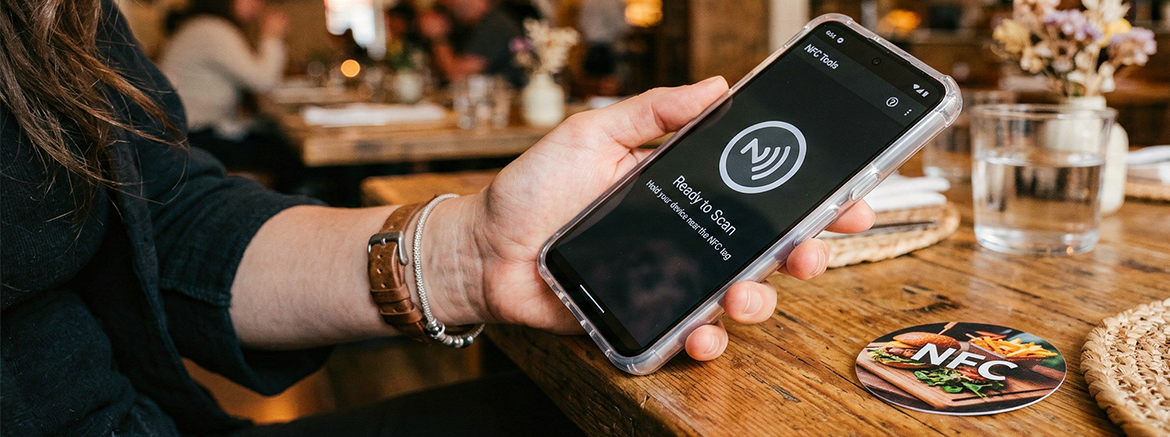
NFC stickers can be easily programmed using a smartphone. On Android, you can use free apps such as NFC Tools or NFC TagWriter by NXP. On iPhone (iOS 13 and later), you can programme NFC using apps such as NFC Tools or Automations in the Shortcuts app. The typical workflow is as follows: Open the app → Create a new entry (e.g. URL, text, vCard, automation) → Hold the tag against the smartphone’s NFC antenna → Confirm writing. For professional mass production or custom encoding (e.g. EPC encoding for RFID systems), All About Cards also offers industrial encoding services. Once written to, read-only tags can be locked to prevent further overwriting.
Where should I place NFC stickers? Mounting on metal and waterproof NFC tags
Standard NFC stickers can be applied to most smooth, non-metallic surfaces: plastic, glass, paper, wood or leather. The reading range is typically 1–10 cm. Important to note: metal interferes with the NFC function as it shields the electromagnetic field. For use on machinery, tools or metal containers, you will need special on-metal NFC tags (also known as NFC stickers for metal), which feature an insulating layer between the chip antenna and the metal surface. Waterproof NFC tags made from PET film are suitable for outdoor use or damp environments. Depending on the device, the smartphone’s reading antenna is located on the back (Android) or at the top of the back (iPhone). For optimal readability, we recommend a clean, smooth surface free of air bubbles, and avoid sticking the sticker directly over the chip.
Are NFC tags secure? Data protection and security risks
NFC is generally considered secure, as communication is limited to a few centimetres. This makes unauthorised data interception (skimming) from a distance virtually impossible. NFC is more secure than RFID operating at higher frequencies, as its short range requires physical proximity. For sensitive applications (access control, payment), encrypted chips such as MIFARE DESFire EV3 or NTAG424 DNA offer strong cryptographic security with AES-128 encryption. RFID protective films (blockers) can prevent cards with NFC functionality from being read unintentionally whilst in a wallet. For industrial NFC tags without payment data, the security risk is minimal – the data can be password-protected if necessary.
What is the difference between RFID and NFC?
NFC (Near Field Communication) is a subset of RFID technology and operates exclusively at 13.56 MHz (HF band) with a maximum range of 10 cm. RFID covers a broad spectrum of frequencies: LF (125 kHz) for short ranges and access control, HF (13.56 MHz, NFC) for interactive applications, and UHF (860–960 MHz) for logistics and warehouse management with ranges of up to 12 metres. The key difference is that NFC tags can be used with any modern smartphone without the need for a specialised reader, whereas UHF RFID requires specialised readers. RFID is suitable for automated mass data capture, whilst NFC is ideal for interactive consumer applications and personalised marketing. All About Cards offers all three RFID frequencies as well as NFC systems from a single source.
Where are NFC tags used?
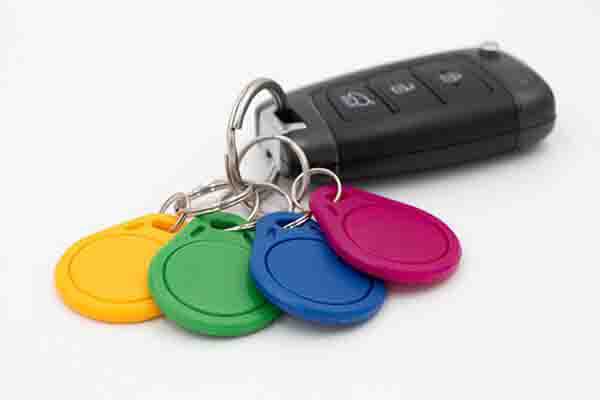
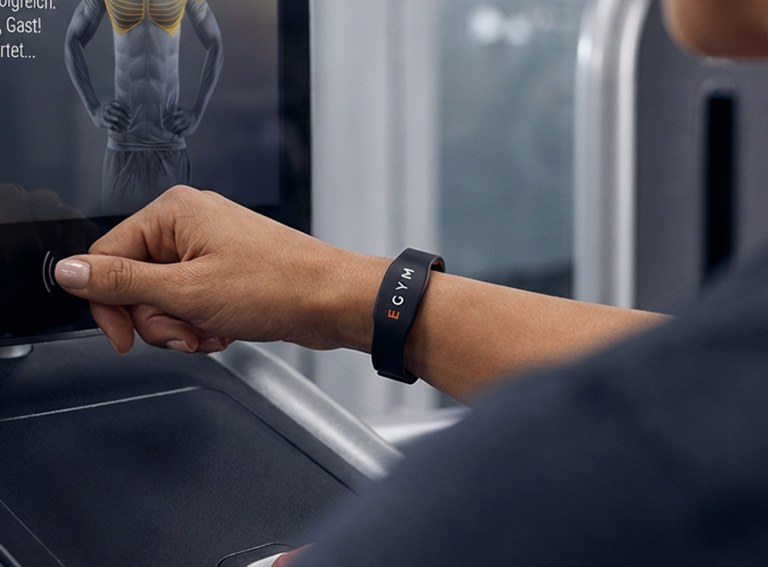
NFC tags can be used for a wide range of applications: in visitor management and access control, they replace traditional ID cards and enable contactless door opening. In marketing, they serve as interactive touchpoints – customers scan the NFC sticker with their smartphone and are redirected straight to landing pages, product videos, discount offers or the digital product passport. In the smart home sector, NFC tags can trigger automation routines (e.g. activating Wi-Fi, switching lights on/off). In the events sector, NFC-enabled scanners verify the authenticity of digital tickets in real time. In warehouse management and stock-taking, NFC stickers replace barcodes to simplify stock recording. As promotional materials, NFC tags printed with logos and corporate identity elements are affixed to smartphone cases, business cards or promotional items. All About Cards can advise you on the optimal NFC solution for your business.