
RFID Key Fobs
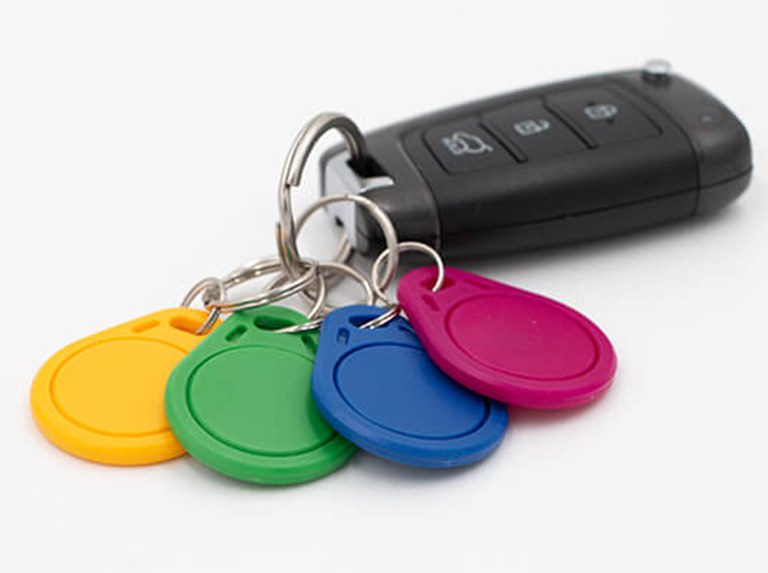
RFID key fobs (also known as RFID key tags) are a well-established alternative to classic RFID cards and are used wherever secure, convenient and long-lasting identification is required. Typical applications include staff identification, time and attendance, access control and visitor management. Thanks to their handy shape and attachment to a keyring, RFID key fobs are always within easy reach during everyday work. On request, RFID key fobs can be individually finished with a company logo, a custom design or personalisation.
Characteristics of RFID key fobs
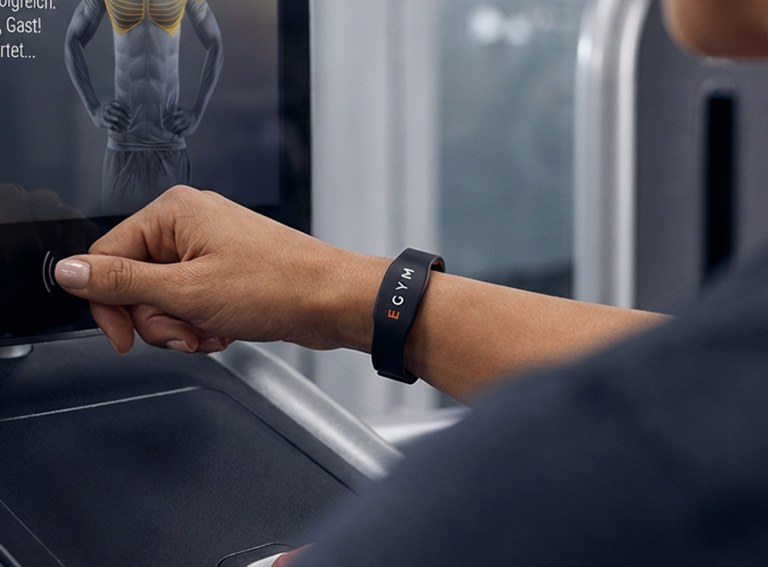
RFID key fobs are especially robust, durable and versatile. The sturdy ABS-plastic casing reliably protects the integrated, contactless RFID chip from external influences. Depending on requirements, various chip technologies are available, such as MIFARE®, Hitag (1, 2), ICode or LEGIC. Alternatively, RFID wristbands can also be used. All RFID media share the same passive technology: power is supplied contactlessly via the reader, so no separate battery is required. The chip and antenna are securely integrated within the key fob's casing. RFID key fobs are available with different read ranges and in the 125 kHz and 13.56 MHz frequencies. A range of memory sizes from 4 bytes upwards is also available, allowing the key fobs to be flexibly adapted to existing systems.
Alongside the technology, appearance also plays an important role: RFID key fobs can be individually printed, laser-engraved or numbered. A special protective coating ensures abrasion-resistant, long-lasting printing. As an access medium for staff, personalised RFID key fobs not only strengthen security but also reinforce identification with the company. For visitors, they also serve as compact RFID transponders and an effective, value-added promotional item.
RFID Technologies Compared
|
Technology |
Frequency |
Typical Applications |
Security Level |
Special Features |
|---|---|---|---|---|
|
MIFARE Classic® 1K / 4K |
13.56 MHz |
Access control, time and attendance |
Medium |
Widely used, cost-effective |
|
MIFARE® DESFire® |
13.56 MHz |
High-security access control |
High |
Encryption, ideal for complex systems |
|
LEGIC |
13.56 MHz |
Corporate & government systems |
High |
Proprietary security architecture |
|
Hitag (1, 2, S) |
125 kHz |
Vehicle & machine identification |
Medium |
Long read range, robust |
|
ICode (SLI, 1) |
13.56 MHz |
Logistics, industry, ticketing |
Medium |
Optimised for longer read distances |
|
Texas Instruments |
13.56 MHz |
Access & identification systems |
Medium |
Industry standard, long-lasting |
|
Inside Contactless |
13.56 MHz |
OEM & special applications |
Medium |
Flexible integration |
FAQ on RFID Key Fobs
How does an RFID lock work?
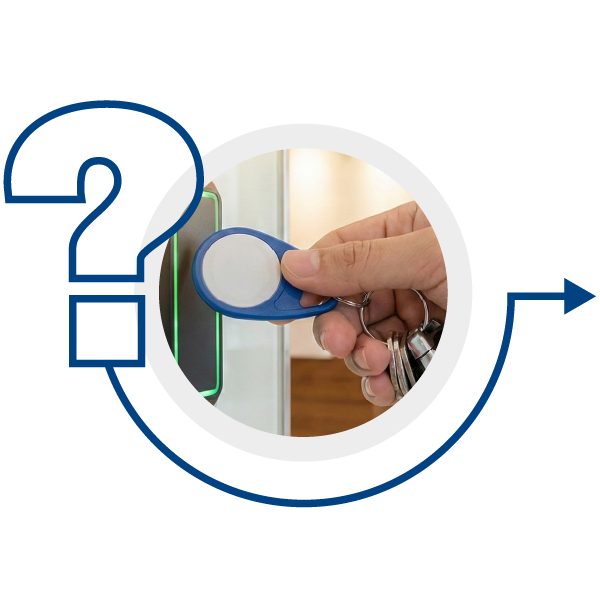
An RFID lock consists of three central components that work seamlessly together: the RFID transponder (e.g. key fob or card), the RFID reader and the electronic locking mechanism.
- RFID transponder: The RFID key fob contains a passive RFID chip with an antenna. When the transponder approaches the reader, it is activated by the electromagnetic field and transmits its stored identifier contactlessly.
- RFID reader: The reader is integrated into the door fitting, wall reader or directly into the RFID lock. It receives the transponder’s identifier, checks it in real time and compares it with the access rights stored in the system.
- Locking mechanism: If the transponder is recognised as authorised, the reader sends a release signal to the electronic locking mechanism. This unlocks the lock for a defined period, allowing the door to be opened. For unauthorised transponders, the lock remains locked.
The entire system operates contactlessly, with low wear and without a battery in the transponder. RFID locks can be flexibly integrated into existing access control systems and offer a secure, convenient solution for businesses, public institutions and leisure facilities.
What are the application areas for RFID key fobs?
- Time and attendance tracking
- Access control and identification
- Visitor management
- Payment and canteen systems
- Event accreditation
- Ticketing at leisure facilities
- Applications in fitness studios
What are the advantages of RFID key fobs?
- High security compared with simple RFID tags, especially for personalised access applications
- Very high robustness thanks to a sturdy, torsion-resistant plastic casing – more durable than RFID cards
- Position-independent reading, just as convenient as RFID cards and wristbands
- Easy everyday handling thanks to attachment to a key ring – no need to carry it separately
- Flexible segmentation for different applications (e.g. access, time and attendance, identification)
- Insensitive to dust, dirt and ambient light – ideal for industrial and outdoor areas
- Fast and reliable data transmission at a level comparable to other contactless RFID media
- High recognition value and stronger customer or employee loyalty than purely functional RFID tags
What are the disadvantages of RFID key fobs compared with other RFID media?
Despite their many advantages, there are also some aspects to consider with RFID key fobs compared with other RFID media such as cards or wristbands:
- Susceptibility to loss: RFID key fobs are usually carried on a key ring. If the key ring is lost, the transponder is lost with it. RFID wristbands, on the other hand, are worn directly on the body and are less easily mislaid.
- Larger format than cards: Compared with flat RFID cards, key fobs are bulkier and less suitable for wallets or card holders.
- Less advertising space: Thanks to their larger, flat surface, RFID cards offer more room for logos, graphics or additional information than a key fob.
- Less suitable for short-term use: For events, trade fairs or swimming pools, RFID wristbands are often more practical, as they can be issued and collected again quickly.
- Dependence on the key ring: If the key ring or another carrier is not on hand (e.g. in sport or leisure settings), the RFID key fob cannot be used, whereas wristbands or cards can be used more flexibly.
The choice of the right RFID medium therefore depends heavily on the specific area of use, the length of use and the desired level of wearing comfort.
What other RFID media are available?
RFID cards are a flexible and cost-effective solution for many application areas. They offer a large advertising and design surface, are suitable for photo and name personalisation, and can be conveniently carried in wallets or card holders. RFID cards are ideal for ID cards, visitor badges and applications with frequently changing users.
RFID wristbands are ideal for short-term and leisure applications where high wearing comfort and protection against loss are paramount. They are worn directly on the wrist and are particularly suitable for events, swimming pools, sports facilities or festivals. RFID wristbands are also a practical solution in sensitive areas where no key ring is carried.
RFID tags and RFID labels are mainly used where direct user identification is not required. They can be discreetly attached to objects, machines, vehicles or products and are ideal for inventory management, machine identification, logistics processes and automated workflows. Their high robustness and permanent fixing make them particularly low-maintenance.