Printing RFID Cards
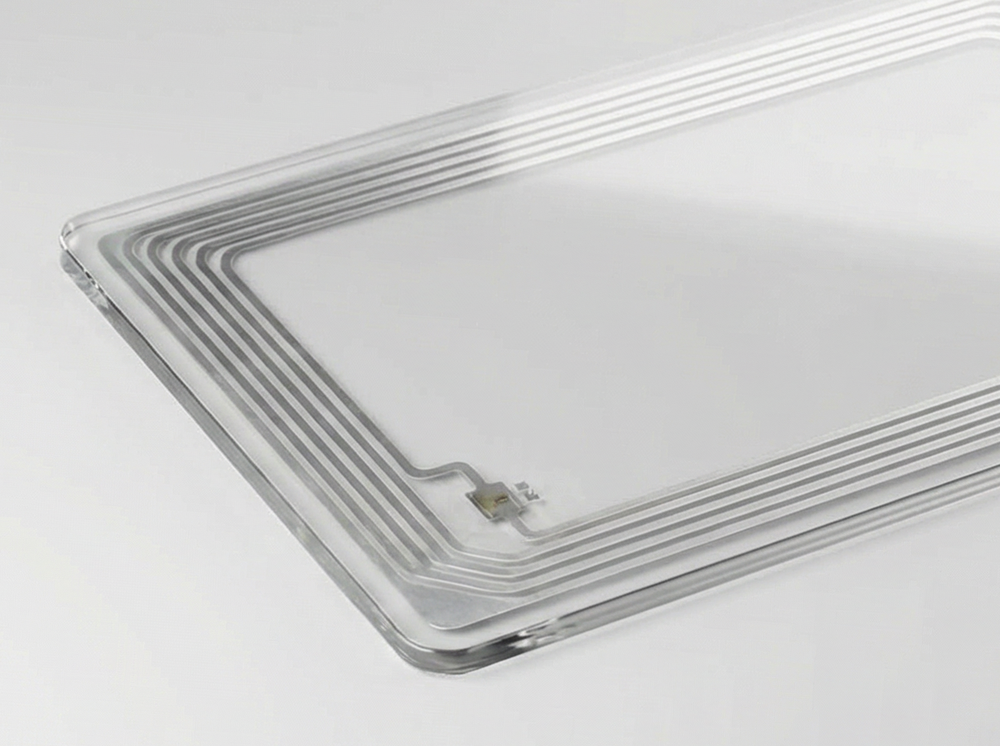
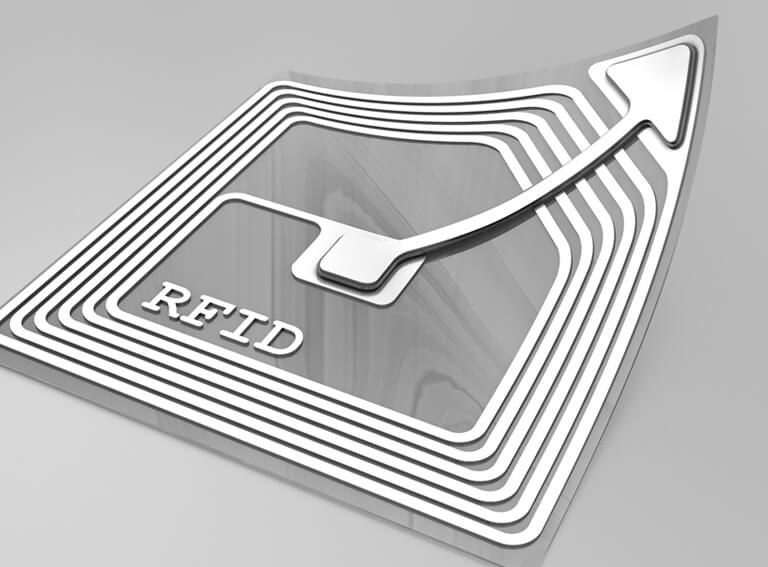
The abbreviation RFID stands for Radio Frequency Identification – a technology for automatic, contactless identification using radio waves. An RFID card consists of laminated PVC and is fitted inside with a radio frequency antenna or a smart card inlay. These components enable contactless reading and writing via an RFID reader.
RFID Cards from All About Cards
All About Cards offers fully produced, printed and fully encoded RFID cards – ready for immediate use in access control, time tracking, payment or visitor management.
We take care of the entire process for you:
- High-quality printing (CMYK)
- Personalization (name, employee photo, numbering, etc.)
- Professional encoding of all common RFID technologies
- Quality control & shipping
This way you get everything from a single source – with no extra effort for your company.
Added value for companies – why RFID cards offer real efficiency benefits
For companies, RFID cards offer far more than a modern identification technology: they optimize business processes, reduce administrative effort and increase security. Whether in access control, visitor management, time tracking or payment processes – RFID systems ensure smooth workflows and measurable time and cost savings. Thanks to their durability, high data security and the ability to combine several applications on a single card, they are an economical and future-proof tool, especially for medium-sized and large companies.
REQUEST A QUOTE BUY BLANK CARDS IN THE WEBSHOP
FAQ on RFID Cards
How does RFID work?
An RFID system consists of two main components: the card (transponder) and the reader.
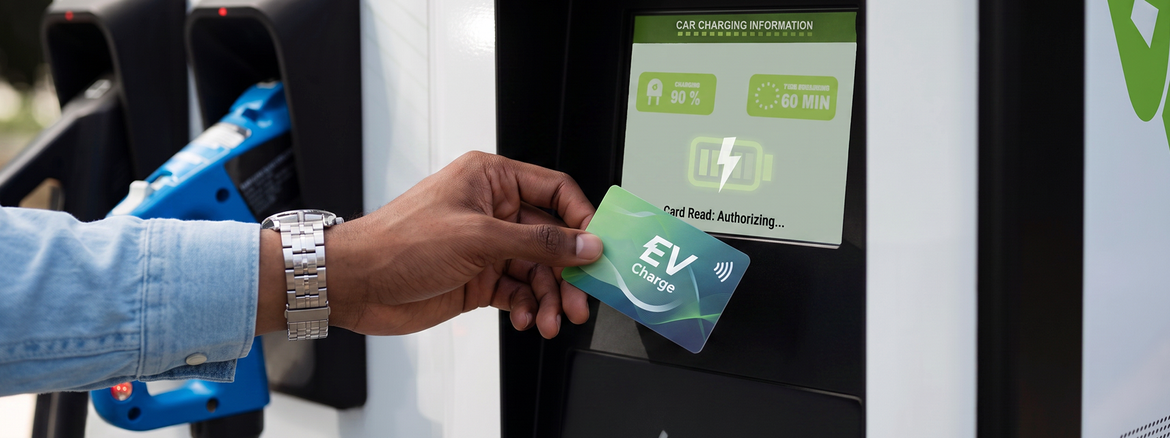
- The RFID card contains a small chip and an antenna. When held within the electromagnetic field of a reader, the chip is activated and sends data back.
- The RFID reader generates the necessary field, receives the card data and transmits it to the software behind it.
This is how contactless identification works in seconds – without inserting, without line of sight, and without moving parts that could wear out.
What are the advantages of RFID cards?
An RFID card offers decisive advantages over magnetic stripe or barcode cards:
- Contactless identification without line of sight
- Wear-free, since the transponder is located inside
- Resistant to moisture, dirt and wear
- Maintenance-free, since passive RFID cards do not need their own power source
- Flexible read ranges: from a few centimeters to several meters – depending on the technology
Are there any disadvantages to RFID cards?
Like any technology, RFID cards also have a few points that should be considered. Depending on the RFID technology used, for example, the read ranges can vary, which in some applications requires precise coordination between card and reader. In addition, for particularly sensitive data, the correct chip type is decisive, since simple low-frequency solutions offer fewer security features than modern HF or LEGIC/MIFARE® systems. However, these potential limitations are not a real risk, since they can be fully offset by the right choice of chip, suitable frequencies and professional coding. With the right advice, you will receive an RFID card that exactly matches your requirements and performs reliably in use.
Where are RFID cards used?
RFID cards are used worldwide in many areas and have long been part of everyday life. They are mainly used in access control, time tracking and ticketing. Other common applications include membership cards, customer cards, voucher and gift cards, government ID cards as well as accreditation cards for events. In addition, RFID cards offer a high level of data security and enable multifunctional applications on a single plastic card – for example, combining an ID with a payment function for the canteen in the form of employee ID cards, student ID cards (school) and student ID cards (university). Bank cards, health cards and VIP cards are also increasingly relying on RFID technology to provide secure, convenient and versatile solutions.
Concrete application examples from business practice
RFID cards are used worldwide in many areas and have long been part of everyday business life. Companies in particular benefit from clearly measurable gains in efficiency and security. Typical use cases include:
- Access control: Employees move quickly and safely through different company areas – without manual key management.
- Time tracking: RFID employee ID cards enable precise, automated time tracking and reduce administrative effort.
- Company and canteen billing: A single card can be used simultaneously as an ID and as a cashless payment method.
- Visitor management: Temporarily coded RFID visitor badges ensure structured processes and greater security.
- Event and trade fair accreditation: RFID badges enable fast check-in, attendee tracking and access zone control.
By combining several applications on a single card, companies reduce material and administration costs, simplify processes, and at the same time increase convenience for employees and visitors.
What does it cost to produce RFID cards?
The cost of producing RFID cards depends on several factors: the chip technology chosen (e.g. MIFARE®, LEGIC or LF/HF/UHF systems), the quantity required, the desired print finishing, and any optional coding or personalization. As a general rule: the higher the print run and the simpler the equipment, the lower the unit price. All About Cards always creates an individual quote tailored exactly to your requirements – from affordable standard cards to high-quality premium solutions with complex coding.
Here you will find more detailed guide prices:
- Simple LF/HF RFID standard cards: approx. €0.20 – €0.60 per card, depending on the print run.
- MIFARE® Classic / DESFire® cards: typically €0.70 – €2.50 per card, depending on the chip and security level.
- LEGIC advant® or high-security HF systems: usually €1.50 – €4.00 per card.
- Individually personalized cards (printing + coding): surcharge depending on scope, €0.10 – €1.00 per card.
These price ranges serve as a general guide and may vary depending on the project goal, security level and order quantity.
What additional costs does a complete RFID system incur?
An RFID system does not consist only of the cards themselves. Depending on the area of application, companies incur further investments that are important for a realistic overall calculation:
- RFID readers: Stationary or mobile readers. Depending on the technology and security requirements, prices usually range from €50 to several hundred euros per device.
- Software & management systems: For managing access rights, time tracking or visitor processes. One-time license costs or ongoing fees apply here.
- Installation & integration costs: Integration into existing IT, security or HR systems by your own IT department or external service providers.
- Maintenance & support: Updates, system maintenance and technical support can vary depending on the provider.
Despite these additional factors, RFID systems are among the most cost-effective identification solutions, as they automate processes, reduce errors, minimize security risks and save costs in the long term – for example through fewer lost keys, reduced administrative effort, or the consolidation of several functions on a single card.
Can I have RFID cards personalized?
Yes – All About Cards offers comprehensive personalization options for RFID cards. These include high-quality four-color printing (CMYK), individual designs, personal data, photos, numbering, barcodes, and the coding of the respective RFID chip. This gives you fully personalized cards tailored exactly to your application.
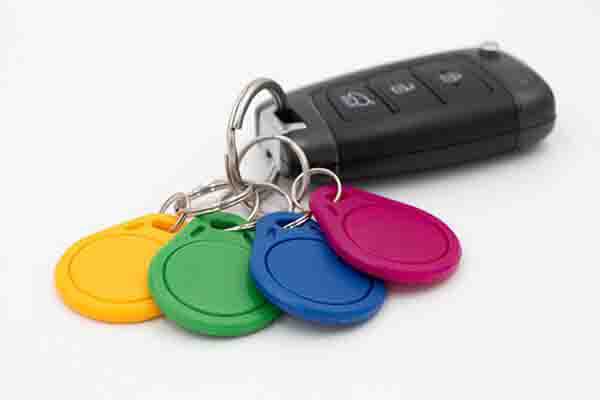
RFID Cards from Manufacturers MIFARE® and LEGIC
When it comes to chip cards, we pay extremely close attention to quality and technical innovation on your behalf. The most widely used RFID card technology worldwide is called MIFARE® (MIFARE® is a registered trademark of NXP B.V.). Thanks to the large production volumes, you can obtain MIFARE® chip cards from market leader NXP Semiconductors at an attractive price and use them for ID and visitor management applications.
In the fields of industrial time tracking and access control systems, HID, Hitag, LEGIC and i-Code transponder cards are also frequently used. In particular, the contactless chip cards from LEGIC Identsystems AG form the ideal basis for high security requirements and can integrate multiple applications into a single plastic card. A cost-effective alternative to these read/write systems are read-only RFID cards. The EM4102 transponder card from EM Microelectronic is the most widely used in this category. Thanks to the transponder, the EM4102 can be read via its unique serial number and assigned to a specific data record.
We offer RFID cards in the following frequency ranges:
- 125 kHz (LF/NF)
- 13.56 MHz (HF)
- 868/960 MHz (UHF)