
RFID Labels & RFID Stickers: Industrial Labels from the Expert
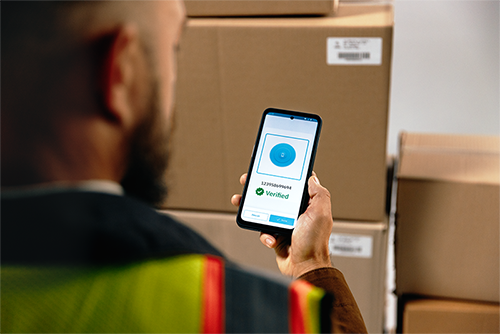
In production, warehouse logistics and supply chain, the speed and reliability of identification determine efficiency and competitiveness. RFID labels (Radio Frequency Identification) - also known as RFID stickers, RFID labels or RFID transponder tags - are the key technology for automated, contactless capture of goods and containers in real time. Unlike barcodes, RFID labels allow entire pallets or containers to be read simultaneously, without line of sight and without manual scanning, even under harsh industrial conditions. All About Cards supplies RFID labels as a tailor-made solution: in all common frequencies and materials, individually printed and configured for your specific application.
RFID Labels as a Solution: Benefits for Industry and Logistics
No line of sight, no manual scanning, no interruption to material flow. Several hundred RFID labels can be captured simultaneously and fully automatically - even on fully loaded pallets in high-bay warehouses. In production, intralogistics and supply chain, this means seamless traceability, shorter throughput times and direct ERP or WMS integration. Flexible for use at low and high temperatures, on metal, glass and plastic, RFID labels are suitable for almost any industrial application.
Typical applications: In manufacturing, RFID labels ensure component and tool tracking along the production line. In warehouse logistics, they automate goods receipt and issue bookings as well as stocktaking without interrupting operations. In supply chain management - including GS1-compliant pallet tracking and automotive JIT deliveries - they provide transparency across company boundaries. This is complemented by asset tracking for machinery, IT equipment and medical products, as well as RFID-based inventories in retail.
RFID Label Types Compared
Choosing the right RFID label type is crucial for project success: frequency, carrier material, adhesive properties and environmental conditions determine which RFID label works reliably in your specific application. All About Cards supplies all common variants - from cost-effective paper labels for indoor applications to rugged anti-metal labels for the toughest industrial environments:
| Label type | Frequency | Typical applications | Strengths | Notes / special features |
|---|---|---|---|---|
| Standard RFID paper labels | 125 kHz / 13.56 MHz | Warehousing, libraries, offices, retail, ticketing | Cost-effective, easy to print, available on rolls or sheets | Not suitable for damp or chemically stressed environments |
| RFID polyester/PET labels | 125 kHz / 13.56 MHz / UHF | Industry, logistics, automotive, production, asset tracking | Temperature-resistant, tear-resistant and resistant to oils, solvents and moisture | Ideal for long-term marking in harsh industrial conditions. |
| Anti-metal RFID labels | HF 13.56 MHz / UHF 860–960 MHz | Metal containers, machinery, tools, steel shelving, vehicles | Special decoupling layer prevents signal absorption by metal and enables reliable readability directly on metal surfaces | Essential for applications on metallic surfaces |
| UHF RFID labels (long range) | 860–960 MHz (UHF) | Supply chain, logistics centers, pallet tracking, vehicle identification (e.g. parking) | Read ranges of several meters, anti-collision for simultaneous reading of many tags as well as high data rate | Optimal for mass identification and high-speed tracking |
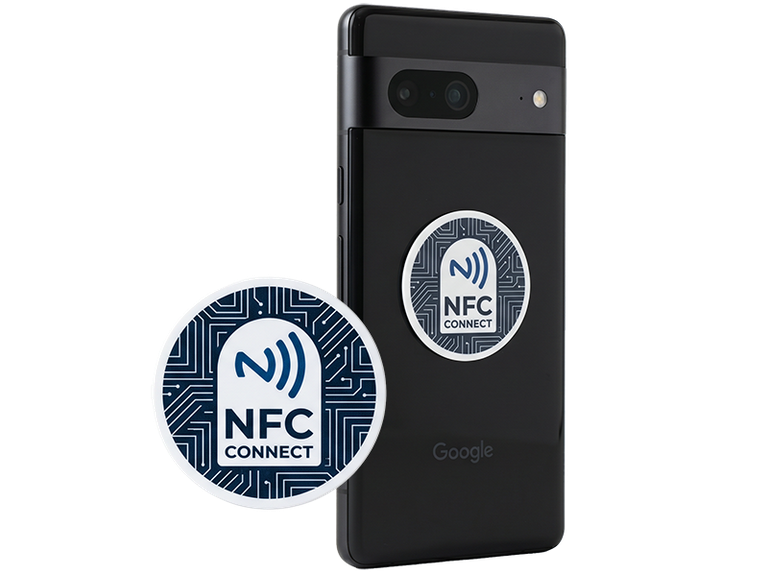
| NFC RFID labels (HF 13.56 MHz) | 13.56 MHz (ISO 14443 / NFC Forum) | Smart posters, product authentication, digital business cards, smartphone interaction | Compatible with NFC-enabled smartphones, freely writable NDEF data, range up to approx. 10 cm | Printable and available individually in various shapes and sizes |
| Temperature- & chemical-resistant RFID labels | Depending on requirements | Sterilization processes, chemical storage, food production, automotive paint lines | Resistant to low and high temperatures as well as to chemicals and cleaning agents (after testing and consultation) | Available on request in various shapes and sizes |
FAQ on RFID Labels and RFID Stickers
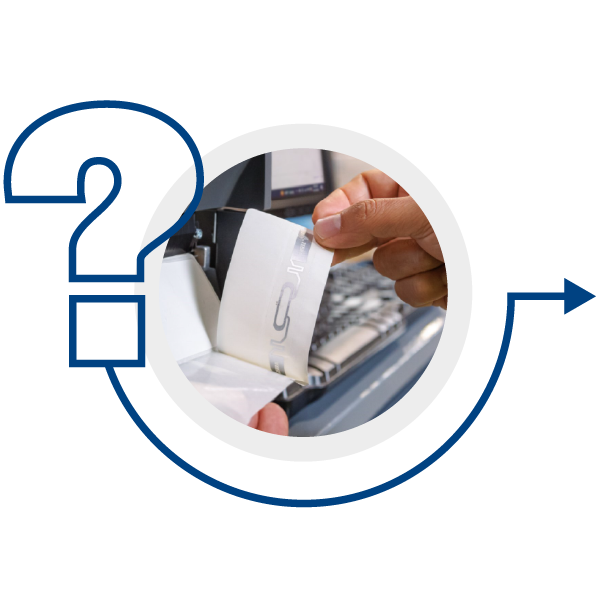
What is an RFID label?
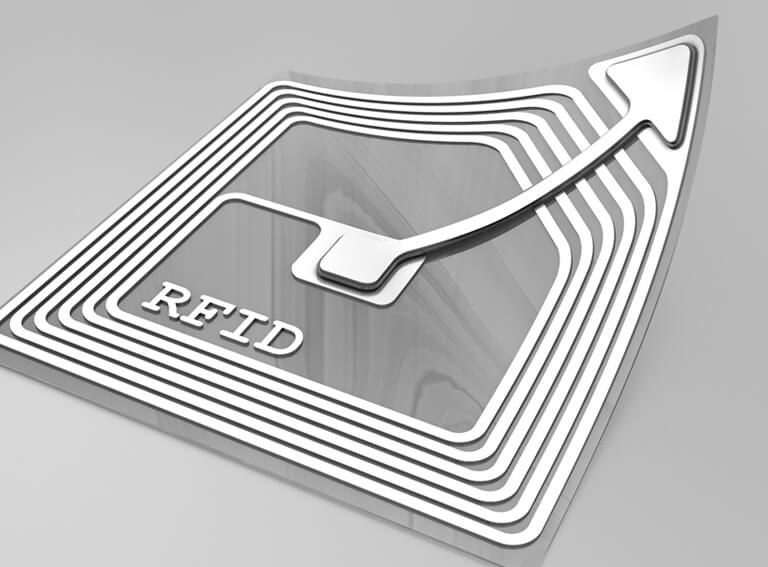
An RFID label (also called an RFID tag, RFID sticker, or RFID transponder label) is a self-adhesive data carrier that combines an RFID chip and an antenna in a thin sticker. The chip stores a unique ID or additional data, which an RFID reader retrieves wirelessly via radio waves. Passive RFID labels do not require their own battery.
How do RFID labels work?
What are the disadvantages of RFID stickers?
How much do RFID labels cost?
Can RFID labels be written to?
Which RFID labels are suitable for metal?
What is the difference between RFID label, RFID tag, and RFID sticker?
What other RFID media does All About Cards offer?