HF Legacy 
MIFARE Classic 1K
For existing access control and hotel systems. Only partially readable by smartphone.
Security Broken
Memory 1 KB
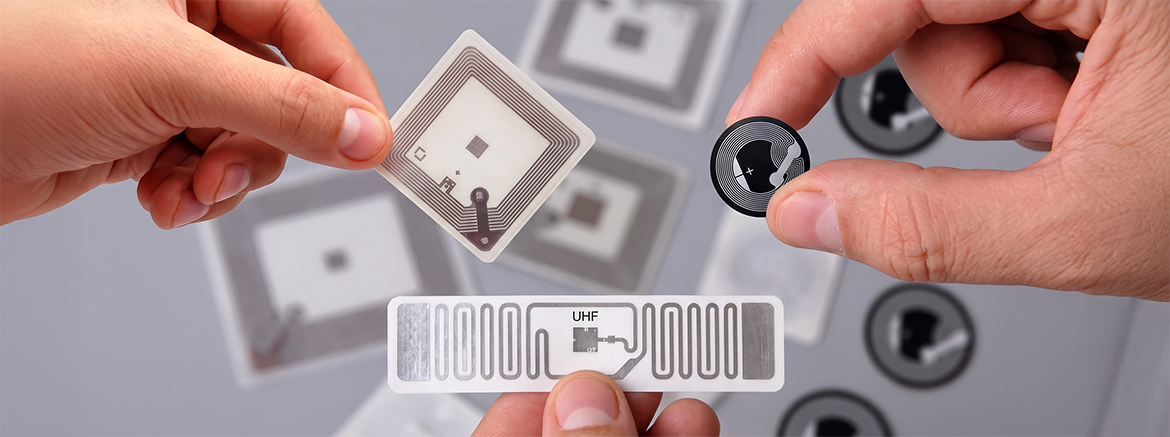

RFID and NFC chips differ in frequency, read range, memory, security and compatibility with card readers. A company ID card therefore has different requirements than a hotel key card, an NFC label or a UHF tag used in logistics.
The existing infrastructure is particularly important. If you already use card readers or a locking system, you usually cannot choose the chip type freely. In a new project, on the other hand, the technology can be selected to suit the application, the security requirements and the desired smartphone use.
For existing access control and hotel systems. Only partially readable by smartphone.
For existing stored-value and canteen applications. Only partially readable by smartphone.
For single-use tickets, stickers and simple event applications.
For event wristbands and loyalty applications.
For secure company ID cards and multi-application cards.
For NFC marketing, business cards and smartphone applications.
Low-cost, MIFARE Classic-compatible card for existing systems without security requirements. Only partially readable by smartphone.
For existing LEGIC access control systems.
For secure access control and multi-application solutions.
For existing library, media and article surveillance systems.
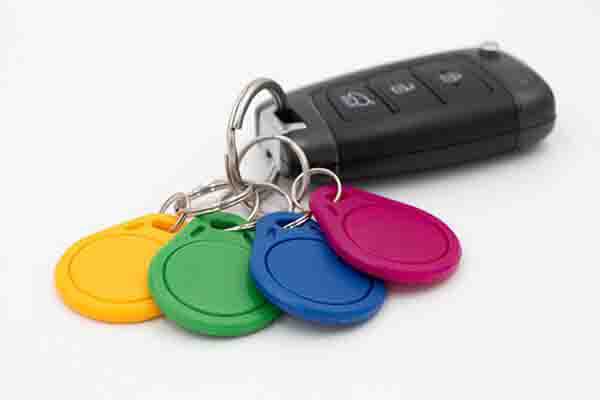
For older 125 kHz access control systems and key fobs.
For animal identification, laundry and industrial LF applications.
For asset tracking, automotive, aviation and mass tagging with additional user memory.
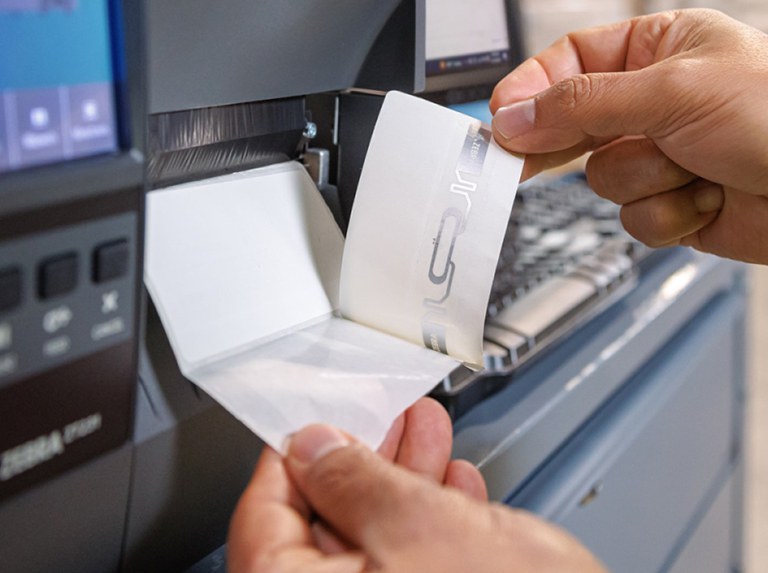
For retail, inventory and item-level tagging.
For track and trace with increased security requirements.
Today, LF is mainly found in existing systems. Simple LF chips such as EM4100 / EM4200 have no cryptographic protection.
In new projects, LF is usually only used if existing readers must continue to be used or if there is a specific technical reason for it.
HF is the most important frequency range for contactless cards and NFC applications. For smart cards, ISO/IEC 14443 is particularly relevant.
ISO/IEC 15693 is used, among other things, when a greater read distance is required, for example in libraries.
UHF is suitable for long read ranges and the fast detection of many tags. This is particularly helpful for inventory and product tagging.
UHF is usually less suitable for classic door access control, because the greater range may be undesirable there.

In an existing system, the first step should be to check which chip types the existing reader supports.
A 125 kHz reader cannot read a 13.56 MHz chip. Even within the same frequency band, chip types are not automatically interchangeable. The specification “MIFARE” alone is therefore often not sufficient. A reader for MIFARE Classic does not necessarily support every DESFire or Ultralight configuration.
For checking compatibility, the manufacturer and model of the reader, the chip type used so far, the frequency, the system in use and, ideally, an existing card are particularly helpful.
When changing the chip standard, new readers or a changed system configuration may be required.